

Who Are the Top Robotic Handling Systems Suppliers in China?

China’s industrial automation market includes manufacturers, system integrators, and robotics specialists serving a wide range of handling tasks. But who are the top robotic handling systems suppliers in China? The answer depends on the application, not just a company’s size or product catalog. A supplier suited to palletizing heavy cartons may not be the right partner for delicate electronic components.

A useful comparison looks beyond robot specifications. Buyers should check payload, reach, cycle time, gripping options, and how well the system connects with conveyors, vision equipment, and existing controls. Ask for application-specific case studies and clear commissioning plans. If possible, observe a similar installation handling real parts at production speed. Small details matter: a gripper that slips on oily packaging can undermine an otherwise capable cell.

Service deserves equal attention. Confirm spare-parts availability, technician response times, training, and support after installation. Request references from customers with comparable products and shift patterns. The most prominent supplier is not always the most dependable choice for a particular factory. Rankings can also change as product lines and service networks develop.

There is no perfect shortlist. Published specifications may not reflect performance in a buyer’s actual environment, and supplier claims should be independently checked. This guide examines leading Chinese suppliers through practical criteria, helping readers identify promising partners while recognizing where more verification is needed.
Who Are the Top Robotic Handling Systems Suppliers in China?

What Are Robotic Handling Systems and How Are They Used?

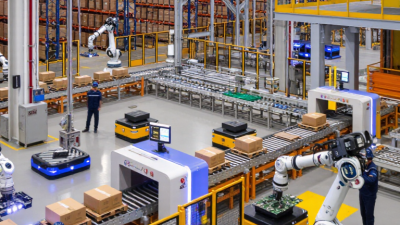
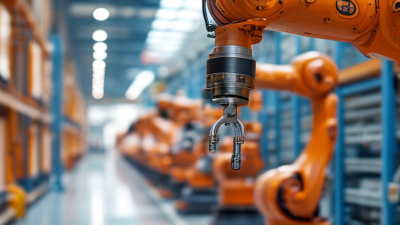
Robotic handling systems combine industrial robots with grippers, sensors, conveyors, and control software to move materials or products. A robot may lift a metal casting from a machine, place it on a conveyor, or stack cartons onto a pallet. The system includes more than the arm. It must also locate each item, grip it securely, and coordinate movements safely with nearby equipment.

The International Federation of Robotics reported 541,302 industrial robot installations worldwide in 2023; China accounted for 276,288, or 51% of the total, in World Robotics 2024.

These figures describe industrial robots broadly, not handling systems alone, but they show the manufacturing context in which automation operates. Common handling tasks include machine tending, pick-and-place, packaging, and palletizing.

Small details matter. A slippery part, unevenly placed box, or delayed sensor signal can interrupt a cycle.

Choosing a system starts with the actual task: item weight, dimensions, cycle time, and required placement accuracy. Engineers also assess floor space, access for maintenance, and how workers share the area.

One planning weakness is assuming products arrive in consistent positions. They often do not. Vision sensors or flexible grippers can help, but add setup and calibration needs. A practical design should be tested with real parts, including awkward ones, before expected throughput is treated as a dependable result.

How Is the Chinese Robotic Handling Systems Market Structured?

China’s robotic handling market is structured around equipment makers, system integrators, component suppliers, and end users. Integrators connect robots with grippers, conveyors, sensors, safety equipment, and factory software. Their work often determines whether a system handles cartons, machine parts, or pallet loads reliably. The International Federation of Robotics’ World Robotics 2024 report recorded 276,288 industrial robot installations in China during 2023, about 51% of global installations. This figure covers industrial robots broadly, not handling systems alone.

Competition therefore extends beyond robot production. Local suppliers often compete on customization, installation speed, and after-sales support, while buyers assess cycle time, payload, floor space, and compatibility with existing lines. Automotive, electronics, logistics, and general manufacturing create varied demand. A robot arm beside a conveyor may be only one element; sensors and grippers must still manage changing product sizes. Public reports rarely separate handling applications consistently, so market-share comparisons deserve caution. That gap matters.

Tips: Ask suppliers for a site-specific cycle-time trial, payload limits, maintenance intervals, and integration costs. Test the system with real parts, not ideal samples.

Who Are the Top Robotic Handling Systems Suppliers in China? How Is the Market Structured?

China’s industrial robot density rose from 187 robots per 10,000 manufacturing employees in 2019 to 470 in 2023. This provides context for the expanding automation market, but it is not a measure of robotic handling system supplier market share. The market includes robot systems, controls, end effectors, machine vision and integration services. Source: International Federation of Robotics, World Robotics 2024.

Which Suppliers Lead China’s Robotic Handling Systems Industry?

China’s robotic handling systems industry is led by suppliers that can combine reliable hardware with practical integration. Strong contenders typically connect industrial robots, grippers, machine vision, conveyors, and safety controls into one workable cell. Their value shows on the factory floor: parts arrive in the correct orientation, cycle times stay consistent, and operators can clear minor faults without waiting for a specialist. That matters.

Leadership is not just a matter of robot speed. Buyers should look for suppliers with experience in the relevant process, such as palletizing, machine tending, or case handling. Ask for references from comparable production lines, clear service response times, and documented acceptance tests. A polished demonstration is useful, but it may not reflect dusty floors, changing part sizes, or uneven incoming materials. I would not treat any single performance claim as proof; even capable suppliers can underestimate commissioning time.

Tips: Bring sample parts and describe peak and average output before requesting a proposal. Check gripper changes, guarding, spare-part availability, and operator training. Request a site visit if possible. A small trial can reveal awkward handoffs or frequent alignment adjustments before a full installation.

Who Are the Top Robotic Handling Systems Suppliers in China? – Which Suppliers Lead China’s Robotic Handling Systems Industry?

China’s supplier landscape includes several types of providers rather than one universally accepted public ranking. The table below compares anonymous supplier segments by their typical roles and evaluation criteria; it does not rank individual companies.

Supplier segment Typical role Common handling applications Where this segment is strongest Useful evaluation criteria
Industrial robot manufacturers Supply robot arms, controllers, software, and related technical support. Machine tending, palletizing, packaging, welding, and material transfer. Standardized robot platforms and applications that can be repeated across production lines. Payload and reach suitability, cycle time, repeatability, service coverage, and spare-parts availability.
Robotic system integrators Design and commission complete cells or production-line solutions using robots and peripheral equipment. Assembly, loading and unloading, inspection, palletizing, and end-of-line handling. Connecting robots with grippers, fixtures, conveyors, safety equipment, and factory controls. Relevant project references, commissioning plan, line availability, safety design, and after-sales response.
Intralogistics automation providers Automate the movement, storage, and picking of materials within facilities. Pallet and tote transport, warehouse picking, goods-to-person workflows, and production-side material delivery. Coordinating mobile robots or other transport equipment with warehouse systems and material flows. Throughput under stated operating conditions, fleet management, traffic handling, system integration, and uptime support.
Machine-vision and picking specialists Provide sensing, recognition, and picking technology, often as part of an integrated robotic solution. Bin picking, part sorting, package identification, and inspection-led handling. Applications where parts vary in position, orientation, appearance, or presentation. Recognition performance on representative parts, cycle time, lighting tolerance, and recovery from picking errors.
Collaborative-robot solution providers Configure collaborative robots and accessories for tasks near people, subject to application-specific risk assessment. Light-duty machine tending, screwdriving, packaging, and flexible workstation tasks. Applications that benefit from flexible deployment and frequent product or workstation changes. Risk assessment, task and tool suitability, achievable cycle time, ease of redeployment, and operator training.

Selection note: Compare suppliers against the same workpiece, cycle-time target, operating schedule, safety requirements, and integration scope. A robot’s specifications alone do not establish the performance of a complete handling system.

What Technologies and Services Distinguish These Suppliers?

Robotic handling suppliers in China distinguish themselves through more than robot arms. Their systems often combine machine vision, force sensing, conveyor tracking, and safety-rated controls. These tools help robots locate irregular parts, adjust grip pressure, and maintain pace as products move. A practical test is simple: can the cell handle a scratched component under changing light?

Integration matters. Suppliers may design grippers for delicate packaging or heavy metal blanks, then coordinate robots with presses, inspection stations, and warehouse software. Good commissioning includes cycle-time trials, fault recovery checks, and operator training. Small details count. A poorly placed sensor can cause repeated stops, even when the robot itself performs well.

After installation, responsive service can protect uptime. Look for documented maintenance schedules, spare-parts planning, remote diagnostics, and clear escalation contacts. Ask for measured results from a comparable application, not only a demonstration video. One limitation deserves attention: projected throughput can depend on stable feeding and consistent part quality. No supplier can remove every production variation, and that should be discussed early. The strongest proposals explain assumptions, acceptance tests, and what happens when real factory conditions differ.

How Can Buyers Evaluate and Select a Chinese Supplier?

Who Are the Top Robotic Handling Systems Suppliers in China? How Can Buyers Evaluate and Select a Chinese Supplier?

China’s supplier market is broad, so shortlist by application fit rather than catalog size. The International Federation of Robotics reported 276,288 industrial robots installed in China in 2023, about 51% of global installations (World Robotics 2024). That figure signals a large market, not guaranteed quality from any individual supplier. Ask suppliers to test your actual parts, including awkward shapes, surface variations, and the heaviest expected load. Review cycle-time results, positioning repeatability, safety provisions, and how the system handles jams. Request a written layout and a clear list of what is included, such as grippers, controls, installation, and operator training.

Numbers help. Not enough.

Check comparable projects, but verify details with permission: product type, operating hours, and measurable performance. Ask who will respond when a line stops, where service staff are based, and which spare parts are held locally. A factory acceptance test using your workpieces can expose problems before shipment. Then agree on measurable acceptance criteria for installation and production trials. Compare total operating costs, not just the quoted equipment price; include integration, maintenance, and expected downtime. A polished demonstration can still miss a difficult shift change or a dusty work area. I would also ask for the test data in writing. A checklist is useful, but it cannot replace a careful visit or a frank conversation with the engineers who will support the system.