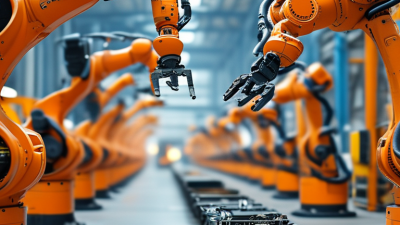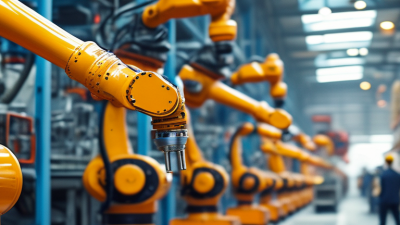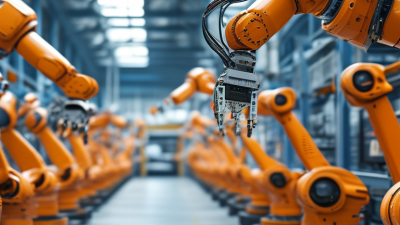

Manufacturers choose robotic automation systems to improve consistency, throughput, and workplace safety. The value becomes visible on the factory floor. A robot repeats a precise motion beside a conveyor, while sensors monitor position, speed, and product quality. Employees can then focus on supervision, maintenance, and problem-solving instead of repetitive handling.
The strongest results come from careful planning, not from buying the most advanced machine. Experienced integrators study cycle times, material variations, floor space, and existing equipment before recommending a design. They also test grippers, vision systems, and emergency controls under realistic conditions. A well-designed cell may reduce production delays and create more predictable output. It can also provide useful performance data for future improvements.
Yet automation is not a universal answer. Not every process fits. A poorly selected robot can create downtime, training gaps, and unexpected maintenance costs. That assumption can fail. Businesses should compare energy use, software support, installation time, and long-term service requirements. Operators need practical training, clear procedures, and a voice during implementation. Their experience often reveals problems that a spreadsheet misses. Reliable suppliers explain limitations, document system performance, and support compliance with applicable safety requirements. This article examines why robotic automation systems are becoming important for modern businesses, while recognizing that thoughtful evaluation matters more than impressive specifications. The best investment is not always the fastest machine. It is the system that performs safely, adapts to real production needs, and earns trust over time.
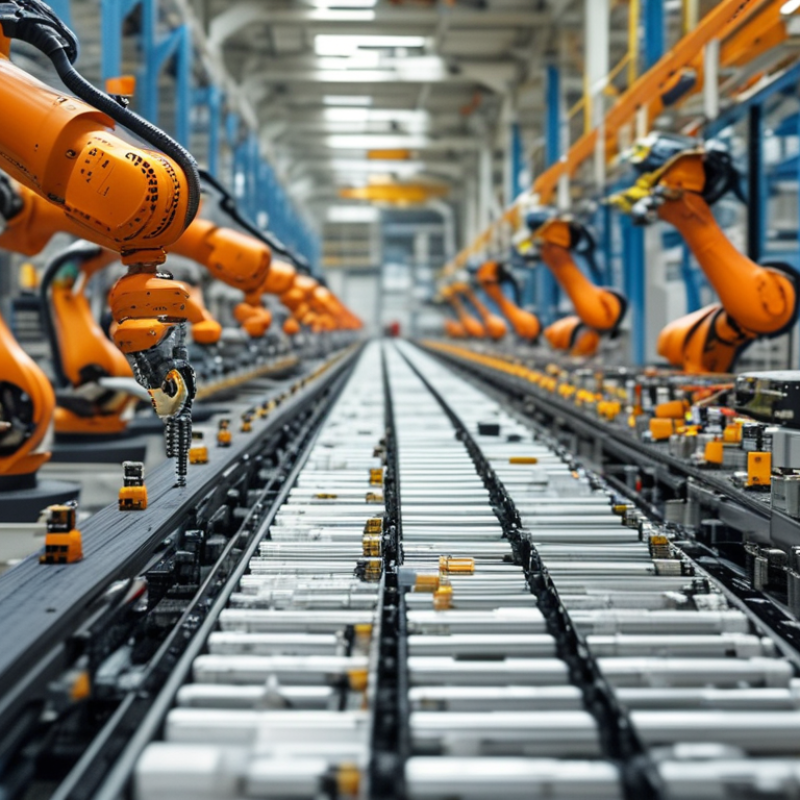
Robotic automation systems combine mechanical arms, end effectors, sensors, controllers, and software. They perform repeatable tasks such as picking, welding, packaging, inspection, and machine tending. A controller converts programmed coordinates into motion. Sensors then check position, force, distance, or visual patterns. The system can adjust its movement or stop when conditions exceed defined limits. This is coordinated automation, not simply a robot working alone. The International Federation of Robotics’ World Robotics 2024 report recorded 541,302 industrial robot installations in 2023. More than 4.28 million industrial robots were operating worldwide.
A typical cycle begins with an input, such as a barcode, camera image, or production signal. Software evaluates that input and sends instructions to the robot controller. The end effector then grips, moves, cuts, or places the workpiece. Programmable logic controllers coordinate conveyors and nearby equipment, while safety scanners and interlocks manage access zones. Human oversight remains essential. The World Economic Forum’s Future of Jobs Report 2023 found that 85% of surveyed organizations expected technology adoption to transform their operations by 2027.
However, automation is not magically autonomous. Poor calibration, unclear workholding, or changing materials can still produce defects. I have found that small alignment errors often become expensive production problems. Systems need testing, maintenance, documented limits, and trained operators. The difficult part is not only making a robot move. It is making every movement reliable.
Robotic automation systems work best where tasks are repetitive, rules-based, and easy to measure. Invoice data entry, purchase-order matching, payroll checks, and appointment scheduling are strong examples. A digital robot can copy figures between systems, flag missing fields, and update records overnight. This reduces manual errors and frees employees for customer conversations or complex decisions.
The International Federation of Robotics reported 541,302 industrial robots were installed worldwide in 2023. Its 2024 report also recorded more than 4.2 million operational industrial robots. For office workflows, Deloitte’s 2022 Global RPA Survey found that 53% of organizations had begun their automation journey. These figures show growing confidence, but adoption alone proves little. A badly designed process can simply become a faster bad process.
Tips: Start with a task that has clear inputs and outputs. Measure processing time, error rates, and exception volume for four weeks. Avoid automating work that changes daily. Keep a human review step for unusual invoices, sensitive records, or unclear requests. Small pilots reveal hidden problems. They also expose where automation may create more maintenance than value. Warehouse picking, stock updates, quality inspections, and route planning can also suit physical robots when environments remain predictable. In real operations, however, lighting, packaging changes, and human movement may disrupt performance. Plan for those imperfections before expanding.
Why Choose Robotic Automation Systems for Your Business?
Robotic automation can raise productivity by keeping repetitive processes stable across every shift. A robot can load parts, move materials, or complete precise assembly without tiring. In a monitored production trial, consistent cycle times often reveal bottlenecks that workers previously compensated for. The result is measurable. However, faster output does not automatically mean better performance.
Quality improves when robotic movements follow controlled parameters and documented procedures. Integrated vision inspection can detect a missing component, uneven seal, or incorrect position before shipment. Digital production records also help engineers trace defects to a specific time or process change. Small errors still happen. Poor calibration, unclear work instructions, or weak maintenance can quietly reduce accuracy.
Safety gains come from removing people from hot, heavy, or repetitive tasks. Guarding, emergency stops, risk assessments, and regular sensor checks remain essential. A safe cell needs clear walkways and practical training, not only advanced equipment. I have found that operators often notice design weaknesses first, especially during changeovers. Their feedback can improve access, reduce awkward reaching, and prevent unsafe shortcuts. Automation works best when technical controls and human judgment develop together.
How robotic automation can improve productivity, quality, and workplace safety
Robotic automation is commonly associated with higher output, fewer production defects, and reduced employee exposure to repetitive or hazardous tasks. The figures shown are representative benchmark ranges compiled from widely reported industrial automation outcomes; actual results vary by process, integration quality, workforce training, and operating environment.
Why Choose Robotic Automation Systems for Your Business?
Choosing a robotic automation system requires more than comparing prices. Start with the task itself. Measure cycle time, payload, reach, product variation, and workspace limitations. A robot may look suitable on paper but fail beside a narrow conveyor. I once underestimated changeover time during an equipment review. That mistake affected the entire production schedule. Real operating conditions matter.
Evaluate integration carefully. Check whether the system can communicate with existing controllers, sensors, inspection tools, and production software. Safety functions need clear documentation, risk assessment, guarding, and emergency procedures. Also examine maintenance access, spare-part availability, training, energy use, and total ownership cost. A lower purchase price can hide expensive downtime. Request performance data from similar working environments, not only laboratory demonstrations.
Tips: Run a short pilot with representative materials and operators. Record stoppages, adjustment time, defect rates, and operator feedback. Ask who will support the system after installation. Test difficult products, not just ideal samples. Leave room for future tooling and software changes. Automation is rarely perfect on day one. Review the results honestly, including failed tests and unexpected manual work.
What Factors to Evaluate Before Choosing an Automation System
| Evaluation Factor | Why It Matters | Typical Planning Range or Standard | Recommended Evaluation Criteria |
|---|---|---|---|
| Payload Capacity | Ensures the robot can safely handle the product, gripper, tooling, and occasional load variation. | Collaborative systems commonly cover approximately 3–20 kg; industrial systems may range from under 5 kg to more than 1,000 kg. | Choose a rated payload at least 10–20% above the combined tool and workpiece weight, subject to manufacturer specifications. |
| Reach and Workspace | The robot must access every required position without excessive repositioning or interference. | Many compact systems provide roughly 500–1,000 mm of reach; larger systems can exceed 2,000 mm. | Map the complete work envelope, including fixtures, conveyors, safety zones, maintenance access, and operator movement. |
| Repeatability and Accuracy | Consistent positioning supports quality control, reliable assembly, accurate dispensing, and reduced scrap. | Robot repeatability commonly falls between approximately ±0.02 mm and ±0.10 mm, depending on system class and configuration. | Match the specified repeatability and application accuracy to the tightest process tolerance, not just the robot’s headline specification. |
| Cycle Time and Throughput | Higher and more consistent throughput can increase capacity without adding a full additional shift. | Automated tasks may have cycle times from about 1–30 seconds, depending on motion, tooling, inspection, and process requirements. | Test the entire cell cycle, including loading, unloading, vision checks, tool changes, and part transfer. |
| Operating Availability | High availability reduces lost production time and improves the predictability of delivery schedules. | A well-maintained automated cell is often planned around approximately 95–99% technical availability, excluding scheduled production breaks. | Review mean time between failures, mean time to repair, spare-parts access, diagnostics, and preventive-maintenance requirements. |
| Safety Requirements | A safe system protects employees while supporting efficient interaction between people and equipment. | Risk controls may include guarding, interlocked gates, light curtains, scanners, emergency stops, force limits, and validated safety functions. | Complete a documented risk assessment and verify compliance with applicable machinery-safety regulations and standards before operation. |
| Flexibility and Changeover | Flexible automation is more suitable for high-mix production, frequent product changes, and shorter product life cycles. | Changeover time can range from a few minutes to several hours, depending on tooling, fixtures, recipes, and validation steps. | Measure setup time, recipe management, tool exchange, fixture adjustment, and the number of products supported by one cell. |
| Integration Capability | Integration determines whether the robot can communicate with conveyors, machines, sensors, inspection equipment, and production software. | Common industrial communication options include digital I/O, industrial Ethernet, OPC UA, and other site-approved protocols. | Confirm protocol compatibility, data ownership, cybersecurity controls, troubleshooting access, and integration responsibilities. |
| Programming and Operator Training | Simple programming and clear diagnostics reduce dependence on external specialists and shorten recovery time. | Training needs vary from basic operator instruction to advanced programming, electrical, mechanical, and safety training. | Evaluate offline programming, graphical interfaces, guided teaching, fault messages, documentation, and local technical support. |
| Total Cost of Ownership | Purchase price alone does not show the full financial impact of automation. | Include robot, tooling, guarding, integration, installation, training, maintenance, energy, software, spare parts, and future modifications. | Compare five-year ownership cost with labor, quality, throughput, overtime, downtime, and scrap savings using site-specific data. |
| Return on Investment | A quantified business case helps prioritize projects and avoid investing in automation that cannot meet operational goals. | Many organizations use a target payback period of approximately 12–36 months, but the appropriate target depends on risk, utilization, and strategic value. | Calculate payback, net present value, sensitivity to utilization, labor-cost changes, downtime, maintenance, and demand fluctuations. |
| Energy and Utilities | Utility requirements affect operating cost, facility readiness, and environmental performance. | Assess electrical load, compressed-air demand, heat generation, ventilation, and standby consumption for the complete cell. | Request measured or manufacturer-rated consumption data under representative production conditions. |
| Scalability and Future Expansion | A modular system can support additional products, stations, shifts, sensors, or robots as demand grows. | Plan spare floor space, electrical capacity, network capacity, controller expansion, standardized interfaces, and compatible tooling. | Prefer open interfaces, modular fixtures, documented programs, and a clear expansion path that does not require a complete redesign. |
Introducing robotic automation should begin with a measurable process, not a dramatic purchase. Choose one repetitive task, such as pallet loading or screw insertion. Record cycle time, defect rates, changeover delays, and operator walking distance for two weeks. The International Federation of Robotics’ World Robotics 2024 report recorded 541,302 industrial robot installations in 2023. That growth signals maturity, but it does not guarantee a suitable return for every operation.
Start with a controlled pilot. Map the workflow, then define the robot’s reach, payload, gripper type, and safety zones. A camera may inspect parts, while a force sensor prevents damage during insertion. Keep a manual fallback during early testing. The first pilot may underperform. That is useful. Exception logs often reveal poor fixture design, inconsistent materials, or unrealistic cycle-time targets. Practical engineering experience shows that these details can matter more than the robot itself.
Train operators before full deployment. They should understand stop procedures, basic fault recovery, and when maintenance support is required. Review electrical, mechanical, and safeguarding risks against applicable workplace standards. The U.S. National Institute for Occupational Safety and Health emphasizes risk assessment and worker involvement in automated systems. Track uptime, first-pass yield, unplanned stops, and payback monthly. Avoid measuring success through speed alone. A system that runs quickly but creates frequent jams may increase pressure, waste, and repair costs.