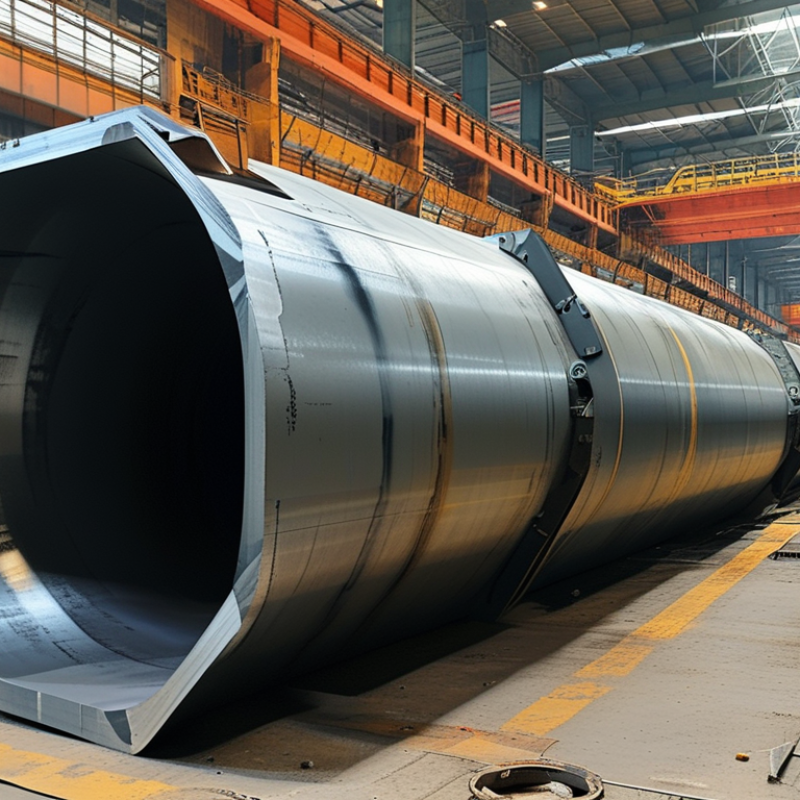
China’s square and rectangular hollow-section industry is supported by a large steel manufacturing base. The World Steel Association’s World Steel in Figures 2025 reports that China produced approximately 1.005 billion tonnes of crude steel in 2024. This scale supports a broad ecosystem of tube mills, forming equipment, welding systems, and automation suppliers. It also creates choice. Too much choice, sometimes.
This guide introduces China’s leading Square Pipe Making Machine manufacturers through practical purchasing criteria. These criteria include forming accuracy, welding stability, line speed, material compatibility, energy use, and after-sales response. The International Organization for Standardization identifies ISO 9001 as a framework for consistent quality management, but certification alone does not prove machine performance. Buyers should request production samples, dimensional inspection records, and references from comparable factories.
Market rankings are not permanent. A manufacturer may excel at high-volume carbon-steel production, yet perform less effectively with stainless steel or thin-wall profiles. The China Iron and Steel Industry Association and customs-related trade data can help verify industry scale, while factory audits reveal details that brochures often omit. Look closely at roll-changing time, electrical cabinet brands, spare-parts availability, and weld-bead control. Ask for evidence.
The strongest suppliers usually combine engineering experience with documented commissioning support. Still, every shortlist requires independent verification. This introduction therefore avoids claiming one universal winner. Instead, it frames a reliable comparison of technology, manufacturing capability, compliance practices, and long-term service value for global buyers.
A square pipe making machine is a production line that converts flat steel strip into square or rectangular hollow sections. It usually includes a decoiler, strip straightener, forming rolls, welding unit, sizing rolls, and flying cut-off saw. The strip enters continuously, while carefully shaped rollers bend it into a closed profile. A welding system then joins the edges along the seam.
The process sounds simple, but it is not. Roll alignment, strip tension, and welding heat strongly affect pipe quality. A small setup error can create twisted corners, uneven walls, or a weak seam. Operators check dimensions with calipers and gauges, while visual inspection helps identify burrs, surface marks, and poor weld appearance. Some lines also use automatic monitoring for speed, temperature, and weld stability.
Different machines handle different steel grades, thicknesses, and profile sizes. A heavier frame may improve stability, but it can increase energy use and maintenance demands. In practical production, the fastest line is not always the most reliable choice. Tooling changes also require time, patience, and accurate records. Specifications are sometimes misunderstood, especially when users focus only on output speed. A dependable setup should match material, pipe dimensions, factory space, maintenance skills, and required tolerances. That balance is often harder than the brochure suggests.
How Square Pipe Making Machines Work
Square pipe making machines transform steel strip into accurate hollow sections through continuous forming. The process begins with a decoiler, which feeds a steel coil into leveling rolls. A shear and butt-welding unit can join coil ends without stopping production. Forming rolls gradually bend the strip into a round shape, then into a square or rectangular profile. High-frequency welding heats the edges, creating a longitudinal seam. Sizing rolls correct the corners and outside dimensions. A flying saw cuts the finished pipe to fixed lengths.
The World Steel Association’s October 2024 Short Range Outlook projected global steel demand at 1.751 billion tonnes in 2024 and 1.772 billion tonnes in 2025. This demand supports efficient tube production, but speed alone is not enough. ASTM A500/A500M and EN 10219 requirements make weld quality, dimensions, and mechanical performance important. Operators usually monitor strip tension, welding power, roll alignment, and cooling temperature. The process looks simple. It is not. A small alignment error can create twisted pipes, uneven corners, or weak welds. Real production data should guide adjustments, rather than relying only on preset values.
Tips: Check coil thickness before setup. Keep forming rolls clean and aligned. Inspect weld seams regularly with suitable non-destructive testing. Record defects by shift; patterns often reveal pressure, temperature, or tooling problems. Some operators change settings too quickly, which can hide the real cause. Calibration records and sample measurements provide stronger evidence.
High-quality square pipe production lines depend on stable forming, accurate welding, and controlled sizing. In China, experienced manufacturers usually design each stage around the customer’s steel grade, wall thickness, and output target. A rigid entry section helps prevent strip wandering. This matters.
A reliable line should include a well-balanced decoiler, precise feeding rolls, and durable forming stands. Hardened rollers reduce surface marks during continuous production. High-frequency welding must maintain steady heat and pressure across the seam. Sensors can monitor voltage, speed, and weld stability in real time. After welding, sizing rolls correct corner dimensions and reduce twisting. Automatic length control improves cutting accuracy, especially during long production runs. The cutting unit should leave clean ends without excessive burrs. Small details affect later construction work.
Strong manufacturers also provide material certificates, trial-production records, and clear maintenance instructions. Ask how they test tolerances, change rollers, and respond to faults. A practical control system should display alarms without confusing operators. Remote support is useful, but local technical training remains important. No production line stays perfect forever. Roll wear, cooling changes, or operator adjustments may slowly affect squareness. Regular inspection is still necessary. A sample pipe should be checked with calipers, gauges, and visual inspection before shipment. Sometimes, a cheaper line appears attractive. Its hidden downtime may cost more.
| Evaluation Dimension | High-Quality Production-Line Benchmark | Typical Technical Data | Why It Matters | Recommended Verification Point |
|---|---|---|---|---|
| Production Process | High-frequency electric resistance welding with continuous forming and sizing | Steel strip is uncoiled, leveled, formed, welded, sized, cut, and discharged in a continuous line | Continuous ERW production supports stable output and consistent weld quality | Confirm whether forming, welding, sizing, cutting, and transfer systems are synchronized |
| Applicable Steel Material | Low-carbon and low-alloy steel strip suitable for structural or mechanical tubing | Common material grades include structural steels specified under ASTM A500, EN 10219, or GB/T 6725 | Material compatibility affects weldability, strength, dimensional stability, and tooling life | Review the required steel grade, yield strength, tensile strength, and chemical composition |
| Square and Rectangular Tube Range | Configured according to the mill model and tooling package | Typical medium-size lines may cover approximately 20 × 20 mm to 200 × 200 mm square tubes; larger ranges require dedicated equipment | The product range determines the forming mill size, motor capacity, roll configuration, and investment level | Check the minimum and maximum outside dimensions rather than relying only on the nominal model name |
| Wall Thickness Capability | Matched to the tube-size range and steel grade | Many general-purpose lines process approximately 0.8–8.0 mm wall thickness; actual limits vary by configuration | Wall-thickness capability influences forming force, welding parameters, speed, and product tolerances | Request a thickness chart showing the permitted range for every target tube size |
| Line Speed | Stable operating speed with controlled acceleration and deceleration | Typical operating speeds may range from about 20 to 120 m/min, depending on tube dimensions and thickness | Maximum speed alone does not indicate productivity if the line cannot maintain weld and dimensional stability | Compare guaranteed production speed at the exact product size, grade, and thickness required |
| Forming Accuracy | Multi-pass roll forming with adjustable guides and properly aligned stands | Accurate forming helps control corner geometry, side straightness, twist, and squareness | Good forming accuracy reduces corrective work and improves downstream fabrication performance | Inspect roll-stand alignment procedures and sample tube dimensional reports |
| Welding System | High-frequency welding with automatic power and impedance control | Typical systems operate in the radio-frequency range and regulate welding power according to line conditions | Stable heat input is essential for uniform fusion, low defect rates, and repeatable weld appearance | Verify weld monitoring, fault alarms, power-control response, and cooling-water protection |
| Sizing and Squaring | Dedicated sizing stands with adjustable horizontal and vertical rolls | Designed to control outside dimensions, corner shape, squareness, and straightness after welding | Correct sizing improves fit-up during construction, framing, machining, and assembly | Check the available adjustment range and the method used to change between product sizes |
| Cutting Accuracy | Servo-controlled flying saw or equivalent synchronized cutting system | Cut-to-length accuracy depends on encoder resolution, synchronization, tube speed, and saw design | Accurate cutting reduces material waste and minimizes additional end-trimming operations | Confirm the guaranteed cutting tolerance for the intended production length |
| Dimensional Control | In-line monitoring combined with laboratory or inspection-station checks | Typical checks include outside dimensions, wall thickness, length, straightness, twist, corner radius, and weld condition | Consistent inspection helps identify drift before large quantities of nonconforming tube are produced | Request inspection records and the measurement method used for each critical dimension |
| Tooling Changeover | Modular rolls and guided changeover procedures | Changeover time depends on product range, roll design, operator access, and stored setup data | Shorter and more repeatable changeovers improve equipment utilization and reduce setup errors | Evaluate changeover time using the actual size changes expected in daily production |
| Automation and Controls | Centralized PLC, human-machine interface, recipe management, and alarm records | Useful functions include speed synchronization, production counters, parameter storage, and fault diagnostics | Automation improves repeatability, operator safety, traceability, and troubleshooting efficiency | Check whether recipes, alarms, operating data, and maintenance records can be backed up |
| Cooling and Lubrication | Dedicated closed-loop cooling and controlled lubrication systems | Cooling is commonly applied to the welding area, high-frequency equipment, rolls, and saw components | Proper thermal control protects equipment and helps maintain stable production conditions | Review cooling capacity, filtration, flow alarms, water-quality requirements, and maintenance intervals |
| Safety Design | Guarding, emergency stops, interlocks, electrical protection, and clear operating procedures | Key risk areas include rotating rolls, high-frequency electrical equipment, hot weld zones, and flying saws | Effective safety systems reduce injury risks and support regulatory compliance | Verify risk assessment documents, emergency-stop coverage, guarding, and operator training requirements |
| Energy Efficiency | Efficient drive motors, optimized welding power, and automatic idle or standby functions | Energy consumption varies with tube size, wall thickness, line speed, welding power, and operating schedule | Lower energy use can reduce operating costs without sacrificing production stability | Request energy-consumption data measured under a clearly defined product and speed condition |
| Quality Documentation | Complete technical documentation and traceable acceptance records | Important documents include layout drawings, electrical diagrams, manuals, spare-parts lists, and inspection reports | Good documentation supports installation, maintenance, training, and long-term operation | Confirm that documents cover the complete line and are supplied in the required language |
| Installation and Service | Structured commissioning, operator training, and technical support | Support may include installation guidance, trial production, process adjustment, and maintenance training | Professional commissioning helps the line reach stable production more quickly | Clarify the service scope, response time, training hours, warranty terms, and spare-parts availability |
| Overall Selection Priority | Match the complete line to the required product mix instead of selecting by speed alone | The best configuration depends on tube dimensions, steel grade, wall thickness, annual output, quality standard, and available floor space | A properly matched line normally provides better productivity, quality consistency, and total cost control | Use production samples, acceptance tests, guaranteed parameters, and lifecycle costs for final comparison |

Top Square Pipe Making Machine Manufacturers in China
China remains a major sourcing base for square pipe making machines. The World Steel Association reported 1.84 billion tonnes of global crude steel production in 2024. China produced about 1.005 billion tonnes, supporting a deep equipment and fabrication supply chain. For buyers, the top square pipe making machine manufacturers in China should demonstrate more than production capacity. They need proven forming accuracy, stable welding performance, and responsive technical support.
A reliable evaluation starts with the machine’s operating details. Check tube size ranges, wall thickness limits, line speed, motor configuration, and automatic size changes. Ask for production records using comparable steel grades. A small sample run can reveal edge alignment problems, unstable welds, or excessive scrap. According to ISO 9001 quality management principles, documented inspection and traceability matter at every stage. The certificate alone is not enough.
Factory audits also deserve attention. Review machining areas, electrical testing, spare-parts storage, and commissioning procedures. Request references from installations with similar output requirements. The International Trade Centre’s trade data shows China’s strong position in manufactured metalworking equipment exports, but export volume does not guarantee equal quality. That is the uncomfortable part. Some suppliers present impressive brochures while offering weak after-sales planning. Buyers should compare total ownership cost, not only the initial quotation. A cheaper line may become expensive when tooling, downtime, and operator training are ignored.
The chart shows the theoretical mass per metre of representative carbon-steel square hollow sections commonly used in construction, machinery frames, and industrial fabrication. The values are calculated from the outside width, wall thickness, and a steel density of 7,850 kg/m³, so actual product weight may vary slightly because of manufacturing tolerances and corner radii.
Heavier sections generally require higher forming force, stronger sizing equipment, and greater line capacity. When evaluating a square pipe making machine, buyers should match the machine’s size range and wall-thickness capability with the sections they intend to produce.
Choosing a Chinese square pipe making machine manufacturer requires more than comparing online prices. A polished showroom can mislead. Request factory videos, equipment photos, and a live production demonstration. Check whether the manufacturer actually builds the forming mill, welding unit, sizing section, and control cabinet. Ask for production records involving your steel grade, wall thickness, and target pipe dimensions.
Technical details reveal real capability. Review forming accuracy, weld stability, cutting tolerance, and line speed under continuous operation. Request sample pipes from the same material specification you will use. Measure corner radius, outside dimensions, wall thickness, and surface quality with calibrated tools. Ask for electrical diagrams, spare-parts lists, installation procedures, and maintenance schedules. A reliable manufacturer explains limits clearly instead of promising every result.
Visit the factory when possible. Observe material storage, machining quality, testing equipment, and worker safety practices. Speak with previous customers, but verify their production scale and machine age. Evaluate response time, language clarity, remote support, and technician availability after delivery. The cheapest quotation may exclude commissioning, training, tooling, or replacement parts. That mistake becomes expensive. I have learned that even experienced buyers can overlook small details, especially software compatibility and local power requirements. Leave every specification in the contract, including acceptance tests, delivery milestones, warranty coverage, and performance remedies. Trust grows from documented evidence, not confident sales language.